In March 2018, in Kigali, African leaders put their signatures to an agreement that many observers had said could not be written. Countries with different currencies, legal systems, languages and economic structures agreed to build a single market. Today, fifty of them have ratified it.
It is worth pausing on what that required. Negotiation among sovereign states is slow and demanding work. Every concession had to be explained at home, to ministries, to industries, to citizens who wanted to know what they would gain. The leaders and negotiators who carried this process did the hardest part of integration: they turned an old aspiration into a binding commitment. Africa owes them that.
The same can be said of other continental commitments. The Great Green Wall began as a Sahelian vision and has become a continental objective. The Single African Air Transport Market set out to open African skies to African airlines. Each was an act of political courage, taken with full knowledge that the results would come slowly.
Two chapters
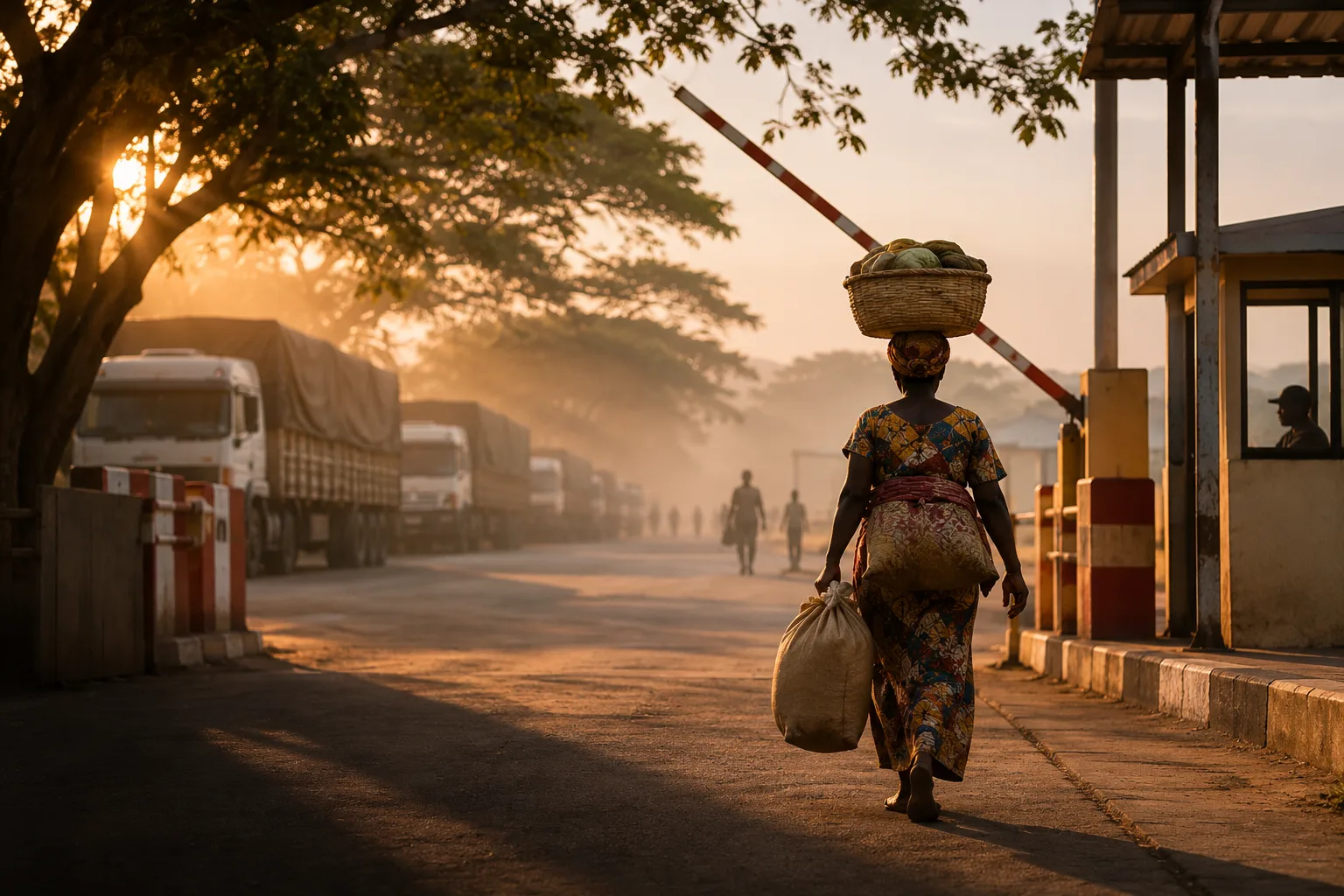
Every great agreement has two chapters. The first is written in conference halls, in legal texts, in the language of articles and annexes. The second is written somewhere else entirely: at a border post at dawn, in a customs office, in the accounts of a small business deciding whether to sell to a neighbouring country.
The second chapter is less visible, and it rarely makes the news. But it is the one citizens will remember. A woman trader does not read the protocol on rules of origin. She knows whether her goods crossed the border in an hour or in three days.
What the field teaches
In the work I have been part of across eleven African countries, restoring land and building livelihoods around it, a few lessons have come back again and again.
- Nothing lasts without local authorities. Governors, mayors, traditional leaders and community organisations make or unmake any continental ambition. They need to be partners from the first day, not informed on the last.
- Capital must be patient. Land restoration, like trade infrastructure, pays back over years. Finance that expects returns within a quarter will not build a corridor or a cooperative.
- The private sector must be a partner, not a spectator. Businesses are not only the beneficiaries of integration. They are the ones who make it real, every time they buy, sell, hire and invest across a border.
None of this is a judgement on what has been done. It is simply the nature of the second chapter: it calls for different skills than the first.
Measured by what people feel
The success of the second chapter will be measured in ordinary moments. A trader who crosses a border with one document instead of six. A young entrepreneur in Lagos who sells a digital service in Nairobi and Dakar without three separate licences. A cooperative that ships processed mango to a neighbouring country rather than raw fruit to another continent. A family that flies from one African capital to another without connecting through Europe.
These moments are already happening, and in growing numbers. The task now is to make them ordinary.
Continuity
African integration is not a project that starts again with each generation. It is built in layers. The founders laid the foundations and wrote the rules, in difficult conditions and against a great deal of scepticism. The work ahead is to carry those rules into daily life, patiently, country by country and sector by sector.
The texts exist. Their authors have done their part. The second chapter belongs to all of us.